
Here are parts 1 and 2 of this series: Part 1 | Part 2.
Months after the second instalment, I’m here to share the third part of this series where I talk to you about my favorite quotes from books of all time. When you find stories and quotes relatable, you’re finding pieces of yourself being reflected back at you. For someone trying to find company in what can be a big, bad world, it is a reassurance of the highest order, that they’re not alone, that there’s someone out there feeling the same things they are feeling. These quotes can be a lifeline, in more ways than one.
The quotes in this post are some that I found to be profoundly relatable as they called to me. I will try to express what they represent for me and my love of reading, which, although not at the ‘I’ll die without books’ level as before, is still quite intense. I’ve spoken about how I note down these quotes in the previous posts but these days, my arthritis is so bad, it’s making me want to curl into a ball and stay there. But hey! Who’d do that when there’s so much work to do and so many books to read? 😀 (send help)
The books you’ll see in this blog post are books I read after I started my own Booktube channel. Again, some of these books I loved and some I didn’t. Either way, let’s go on the third leg of this journey where I share with you more of my favorite quotes from books of all time!
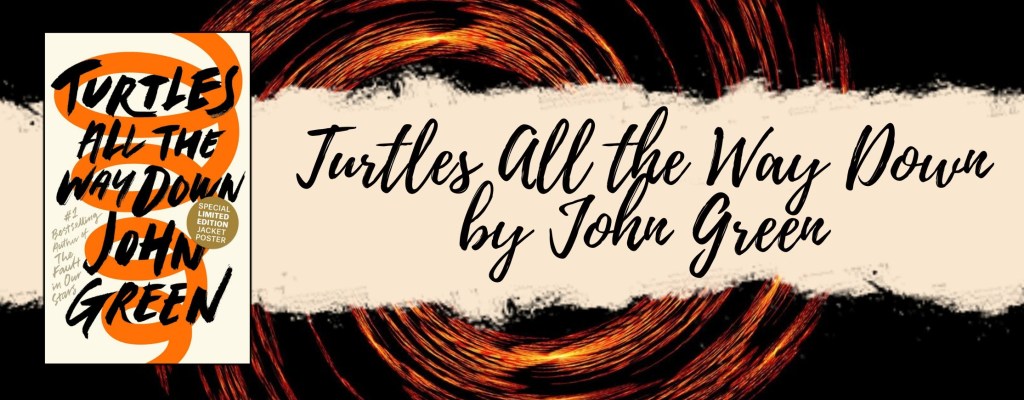
John Green is one of my favorite authors of all time – a fact I’ve repeated over and over again on my socials. He has the knack to take daily, mundane occurrences, and things we do without a second thought, and turn them into quotes that are most profound. Take for example this quote, where he talks about the sky and human connections in the same breath:
“We were looking at the same sky together, which is maybe more intimate than eye contact anyway. Anybody can look at you. It’s quite rare to find someone who sees the same world you see.“
It requires a strange vulnerability to be able to examine the feeling of finding that someone. It demands vulnerability and love and acceptance, throwing a mirror before us to see ourselves, either for what we are or for what is stopping us. More often than not, we tend to be afraid, which is the obstacle that stops us from making progress, irrespective of what part of life we’re talking about. John Green, in this story about mental health, says:
“True terror isn’t being scared; it’s not having a choice in the matter.“
Quotes from books most times hit so close to home but isn’t this true? Isn’t it true that you don’t have a choice in what life has planned out? What nature has planned out? And what can be more terrifying than that? The answer is here, in this next quote:
‘When you lose someone, you’ll realize you’ll eventually lose everyone.’
‘True. And once you know that, you can never forget it.’
Losing someone, and in the cases of so many people, losing everyone, can be so traumatizing, it can make you forget yourself, lose yourself, in all the pain. But maybe you can harvest that pain into yourself, because as he says:
“You’re both the fire and the water that extinguishes it. You’re the narrator, the protagonist, and the sidekick. You’re the storyteller and the story told. You are somebody’s something, but you are also your you.“
I don’t think I can express enough how much John Green and his writing means to me. I just wish I had read his work as a teenager so that I could have seen that I could be more than what I was. I needn’t just have been the shy introvert, although there’s nothing wrong with that. But there’s no point wondering, ‘what if?’ is there? Because life was then. But life is, more than anything, now, which, if you decide to better, becomes a great then.
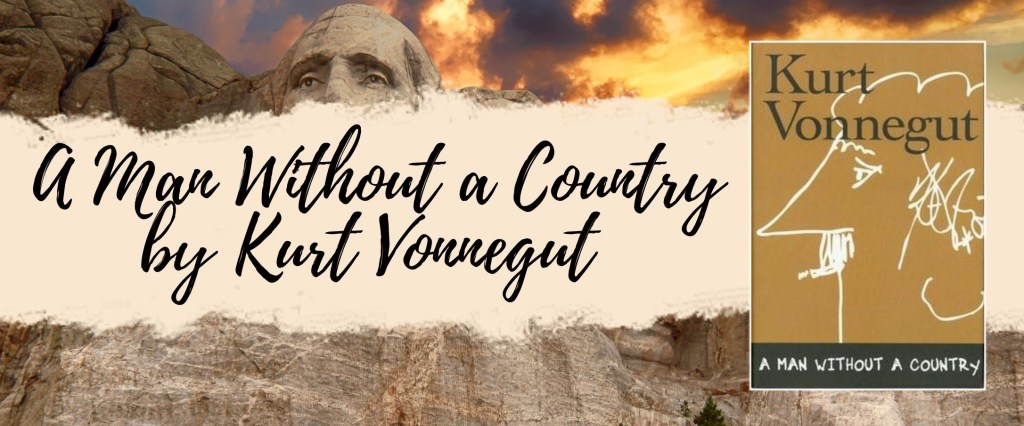
I didn’t (and still don’t) have a lot of experience with Kurt Vonnegut’s writing, the only two of his books that I’ve read being this one and Slapstick. It is quirky and eccentric, but in the best way possible, although some places can feel like that meme where the arrow flies over the person’s head and they miss the point. That person is me. But Vonnegut makes some interesting points, although some people can find them rather unsavory to say the least. Here’s one:
“The arts are not a way to make a living. They are a very human way of making life more bearable. Practicing an art, no matter how well or badly, is a way to make your soul grow.“
Although I agree 2000% with the latter, I’m of the opinion that the arts should also be a way to make a living. If they make life bearable, then why not turn the world and make it livable and bearable for us by making it that way? And I don’t mean that for everybody. Those who want to treat it this way, sure. But those who want to do what they love, I don’t think others should stop them from indulging in the arts for a living and judge them for it. Just remember where all the old artists came from and what they did. Generalizing does nothing but disrespect the fact that humanity is not made up of similar people. Each one of us is different. What works for us might not work for the next person, and what works for them might not work for us.
Until then, let’s read, because this way, we can cast ourselves into a different dimension and lose reality for a little while, something all of us need from time to time. And let’s mark these quotes from books that we can now and again use as reference points.
“A book is an arrangement of twenty-six phonetic symbols, ten numerals, and about eight punctuation marks, and people can cast their eyes over these and envision the eruption of Mount Vesuvius or the Battle of Waterloo.”
I’m now off to read a historical fiction set in the mid-1800s. See you in London! Or not, because colonialist England was more racist than anything and I wouldn’t be caught dead with a foot in the England of that time. 😊

The problem with my brain is that it doesn’t remember many things. So while I might read and love a book, I cannot remember it word for word. Which is probably normal, but the way media has made us believe that you don’t love something if you aren’t obsessed with it rubs me the wrong way. One book that I read but don’t remember a lot of while knowing exactly why I loved it is The Complete Poems of Emily Dickinson. I didn’t expect to love this collection so much but ended up loving it within an inch of my life.
I had thought that Emily Dickinson was one of those poets who one could hardly understand because of the word gymnastics they get up to. But I slowly realized that women authors and poets are more likely to put things as they are, in understandable yet beautifully poetic words, than male ones. Here are some verses from Emily Dickinson that I absolutely love.
“If I can stop one heart from breaking, / I shall not live in vain; / If I can ease one life the aching, / Or cool one pain, / Or help one fainting robin / Unto his nest again, / I shall not live in vain.“
We all try to find purpose in life. While some can be complex, others can be so simple, yet so life-changing. Easing another’s pain, helping people find homes, bringing joy to people – these can be so life-affirming. But where do we start? Who do we become? Do we blend in? Do we stand out? Do we disappear? How will the world see us? How will it treat us? A pair of nobodies making a difference:
“I’m nobody! Who are you? / Are you nobody, too? / Then there’s a pair of us – don’t tell! / They’d banish us, you know.“
And when people do disappear from this Earth, when Death carries them by, that’s when their personalities start to bloom. That’s when their truths become obvious. That’s the cruel way of the world, that it rejects living, breathing people, but when these very people die, scrambles to shower acceptance upon them. This is why some people see death as a relief. Why can we not treat people with kindness in life the way we would in death?
“A death-blow is a life-blow to some / Who, till they died, did not alive become; / Who, had they lived, had died, but when / They died, vitality begun.“
And this is why some people live like haunted houses, the ghosts of people’s words and actions eating away at them. This is why they prefer to stop existing, because then, these words and actions cannot chip away more of them. This is why they prefer to be alone, because their experiences have told them that they are not welcome, that they are like a haunted house that people don’t want to approach. They conveniently omit the fact that these very people were the reason behind them becoming haunted.
“One need not be a chamber to be haunted, / One need not be a house; / The brain has corridors surpassing / Material place.”
“So proud was she to die / It made us all ashamed / That what we cherished, so unknown / To her desire seemed. / So satisfied to go / Where none of us should be, / Immediately, that anguish stooped / Almost to jealousy.”
Emily Dickinson’s poems are glimpses into humanity across time and space. They strip away the outer shell and lay bare the deepest, most honest thoughts that many of us have but cannot dare to share because the world is a tough taskmaster. For this and more, I’m a forever fan of this woman. And for this and more, her poems will always be part of my favorite quotes from books. Through time and space.
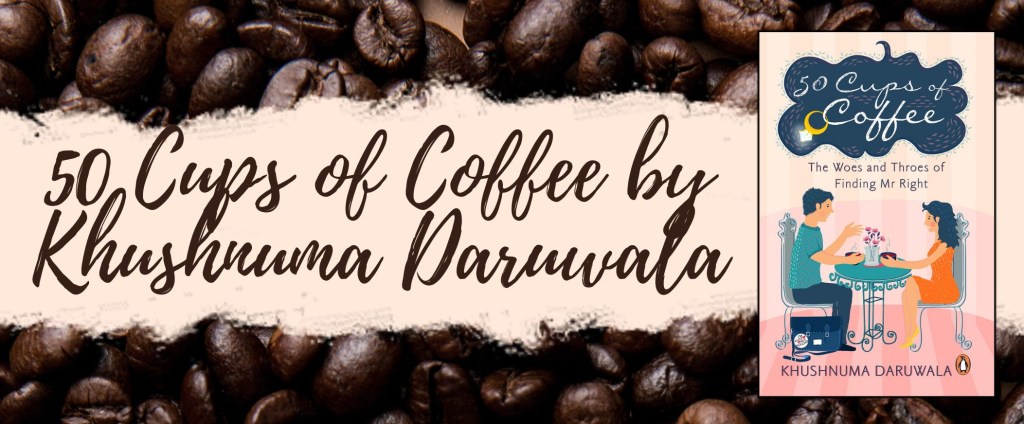
“Why aren’t there more well-publicized advisories that fairy tales shouldn’t be taken seriously? That we shouldn’t form ideas about gender, identity, love, marriage and relationships on their basis?”
This is more of a question that we need to be asking rather than a quote. In a world where gender is seen as binary and that which doesn’t accept anything different from what are its “norms”, we need to demand these answers. For way too long, society has filled our brains with these ‘fairy tales’ and told us that they are what we need to aspire to be. Which is BS. Sure, that could be one way of seeing things. But that can’t be the only way. That SHOULDN’T be. What kind of a society is it then? What kind of a culture?
As Jonathan Van Ness says in their book, Love That Story: A culture that evaluates your total worth based on only your physical appearance cannot connect in a way that sees your humanity.
I’ll end this post on this thought because we all need to stew in this for a bit before proceeding.
So that was part 3 of my favorite quotes from books of all time. What did you think of this post? Do you see any of your favorite quotes in here? What is your favorite quote of all time? Let me know in the comments below. I’d love to hear from you!
Once again, if you’d like to read the first two instalments, here’s where you can: Part 1 | Part 2
I’ll see you in the next blog post.
Until next time, keep reading and add melodrama to your life! ❤
 The Melodramatic Bookworm